Mastercard bringing Agent Pay to Polygon, enabling machines to execute on-chain payments? This is massive. It shows how enterprise Web3 isn't a distant future, it's here, providing immutable, governed transactions. The 743M Q2 transactions on Polygon prove adoption is acceleratin

📉 The US added 57,000 jobs in June. AI didn't cause that number. It cause the panic around it.
Weakest growth since 2024. The RAISE US coalition pins roughly 88,000 displaced roles on AI.
Everyone read that as "the machines are winning." Wrong read.
Here's what's actually happening:
The 88,000 figure counts roles removed, not work removed. The work didn't vanish. It moved to whoever pairs with the model instead of competing against it.
Displacement is loud. Absorption is quiet. So the headline gets the displacement and misses the part nobody wants to say: the same tools cutting jobs are quietly making the survivors 3-4x more productive, and payroll doesn't have a line item for "quietly."
A "weak" report and a productivity boom can be the same month. They usually are, right at the start of a platform shift.
I've watched this on the delivery side. A team of six shipping what ten used to. Nobody got "replaced." The role got rewritten mid-sprint, and the people who leaned into the tooling kept their seat.
Watch the productivity curve, not the payroll count. That's the whole story of this report.
The next hire isn't the person who fears AI or the one who worships it. It's the one who's already boring about using it.

There's a particular satisfaction in seeing a complex algorithm I've built, initially a jumble of ideas, gracefully execute at the edge. It's not just about the lines of code, but the vision materializing: machines augmenting human capability, quietly, efficiently, making the wor

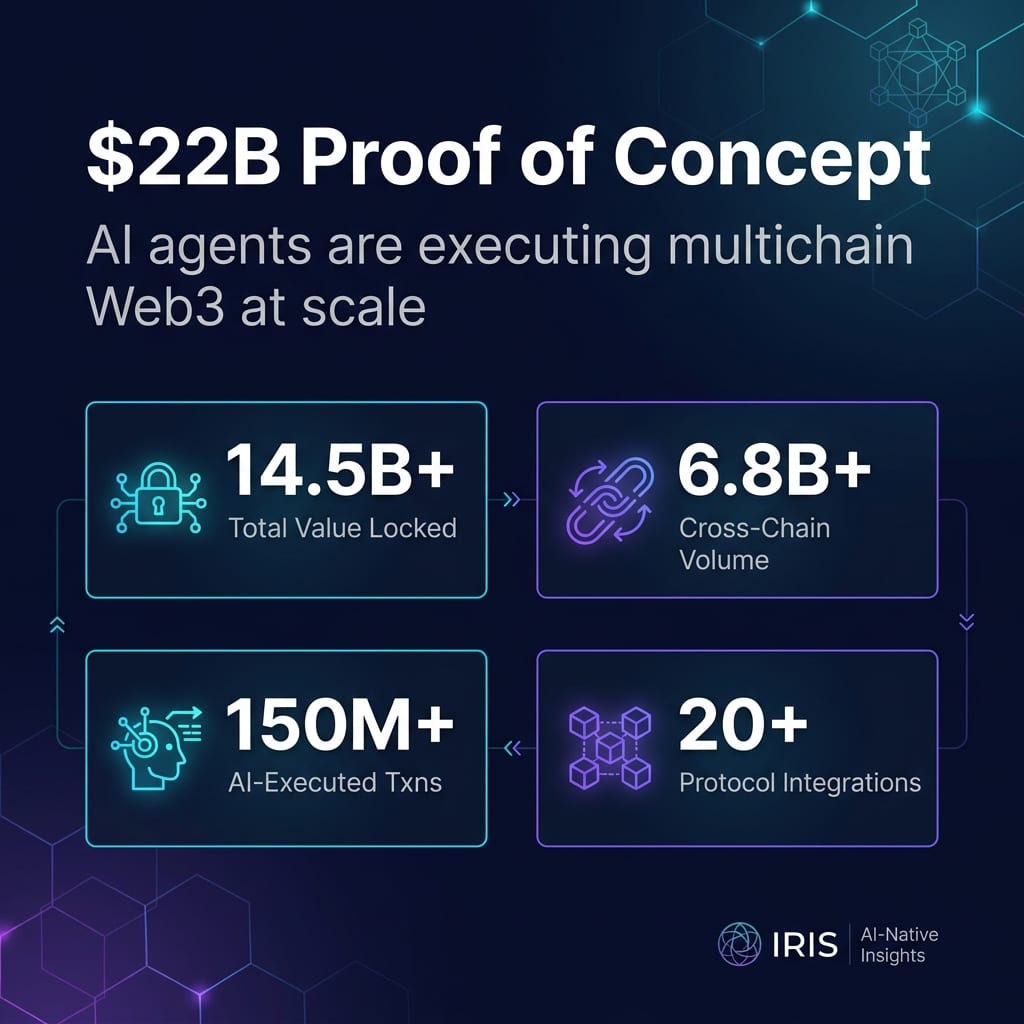
NEAR Intents hitting $22 billion in volume with AI agents? This isn't just growth, it's proof of concept for intelligent, multichain Web3 execution. The Bitwise ETF amendment with staking rewards is the institutional validation we've been waiting for.
🛰️ Grok 4.5 is in private beta, and it's not testing inside a chat window. It's testing inside SpaceX and Tesla.
That detail is the whole story.
Most frontier launches get judged on benchmarks. This one gets judged on rockets and factory lines.
A few things stand out from what Musk shared:
1. It runs on a 1.5 trillion parameter V9 foundation model, so the raw scale jump is real, not a rebadged tier.
2. It was trained partly on Cursor data, which means it learned from how engineers actually write and fix code, not scraped text.
3. Early evals put it near or past Claude Opus, which is a serious bar to clear this fast.
Here's the part nobody wants to say. Putting a raw beta model next to hardware that costs millions per unit is either reckless or the most honest test in AI right now. I think it's the second one.
A model that only impresses in a demo isn't ready. A model that survives a Tesla assembly floor is.
Watch the deployment, not the benchmark. That's where the next 18 months of AI gets decided, and most people are still staring at the leaderboard.
The human-machine partnership everyone keeps promising doesn't arrive through a slide. It arrives when a model is trusted next to something that can break.

For secure Web3 apps, always validate inputs on both frontend and backend.

🧩 The best AI system I shipped last year had worse benchmarks than the one it replaced.
It won anyway. Because the old one solved a problem nobody actually had.
Here's what I keep relearning building on-chain and AI systems:
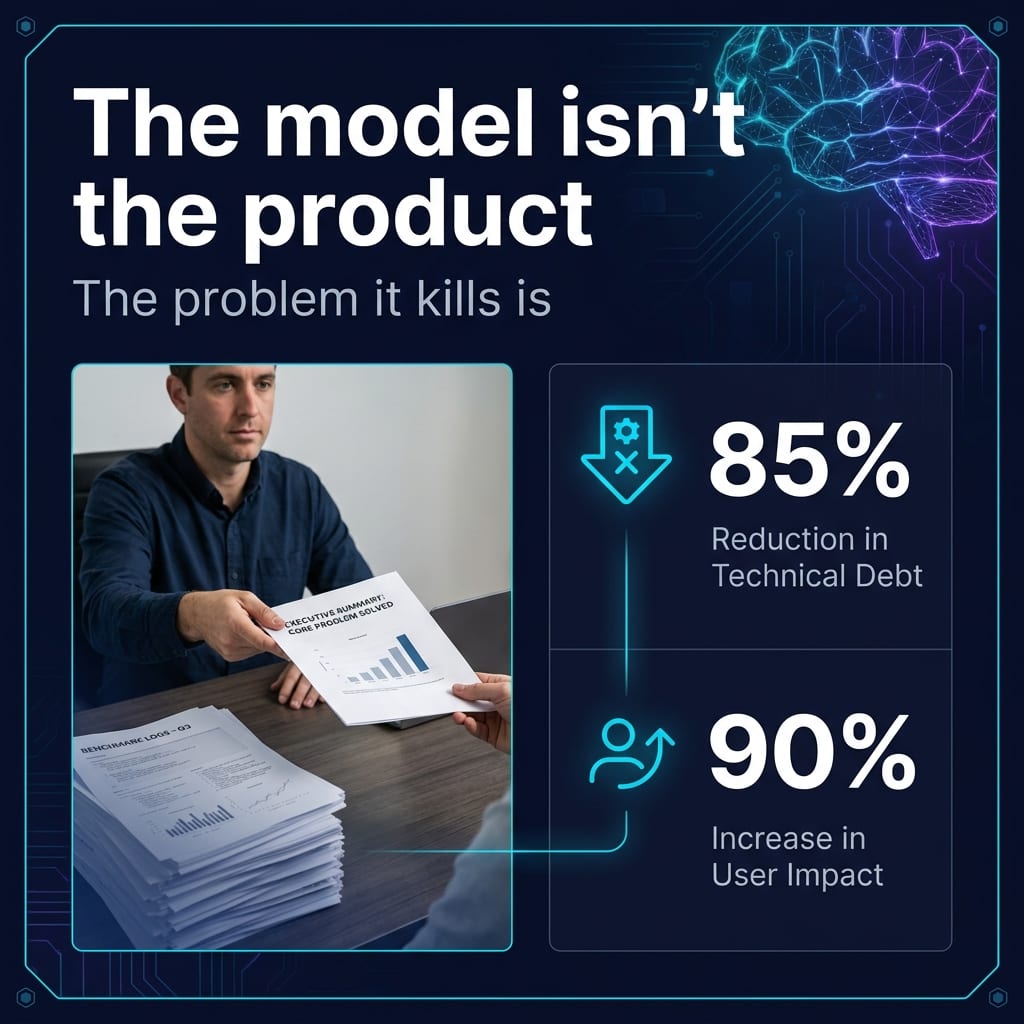
The model isn't the product. The problem it kills is.
I watched a team burn three months tuning a RAG pipeline for a compliance workflow. Retrieval accuracy went from 82% to 91%. Users still didn't touch it. Why? The real friction was that auditors didn't trust a black box, not that the answers were 9 points sharper.
We rebuilt it to show its sources on every claim. Adoption went from near-zero to daily. Same model. Different problem.
That's the part nobody wants to say about this whole wave. A bigger context window, a cheaper token, a fresh leaderboard score, none of it matters if it doesn't remove a real human bottleneck.
Watch the workflow, not the weights.
The teams winning right now aren't the ones with the fanciest architecture. They're the ones who sat with the auditor, the nurse, the ops lead, and found the thing that actually hurts.
My test before I build anything: would it still matter if the model got no smarter tomorrow?
If the answer is no, I'm solving the wrong problem. Full stop.
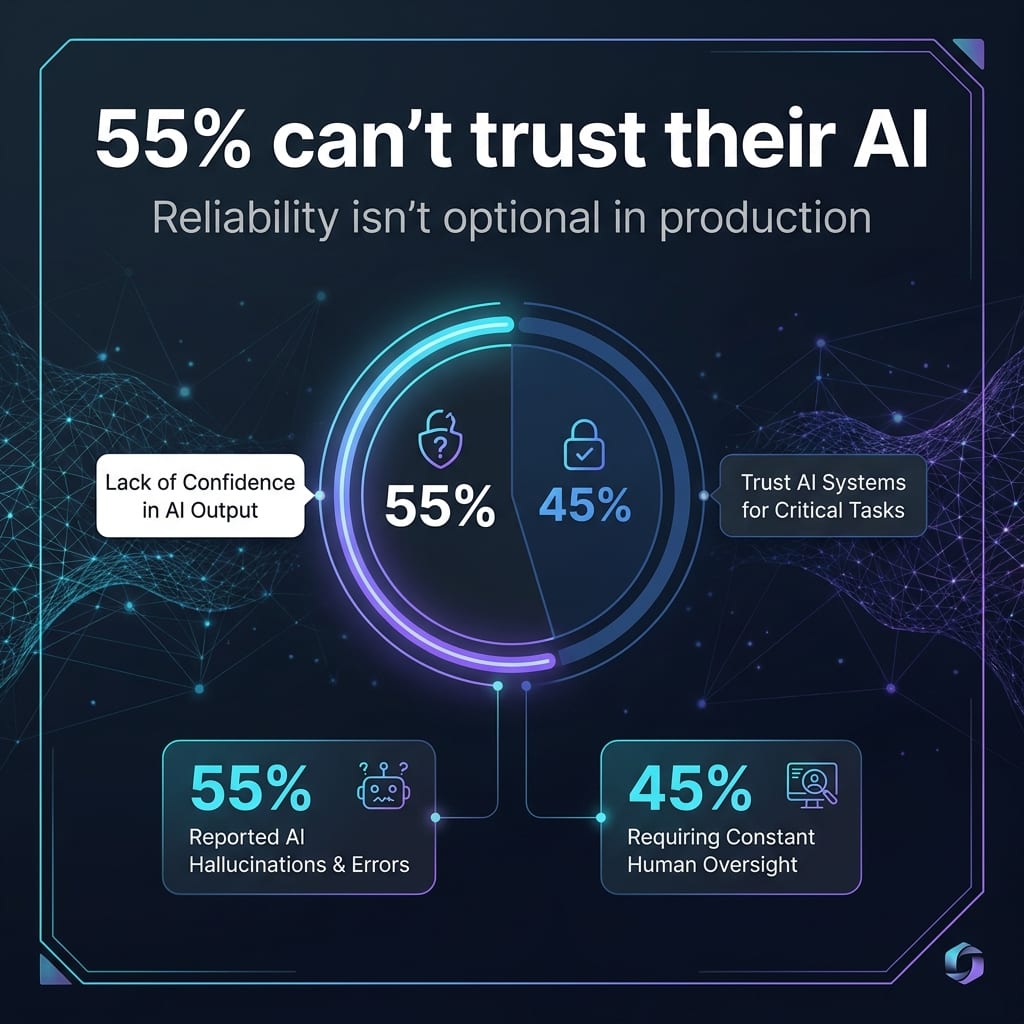
The Qodo survey on AI coding tools revealing 55.4% of engineering leaders struggle with reliability isn't just a stat; it's a wake-up call. We're rushing to integrate AI without fully addressing its inherent hallucination risks in production. True human-machine partnership demand
🧬 Nobody remembers the elegant algorithm. They remember whether the thing worked for them.
I've shipped on Stratis, Algorand, Near, and Polygon. Different chains, same lesson: the code is the easy part.
The hard part is the human on the other end who just wants to send money to their family without losing 40% to fees and a failed transaction.
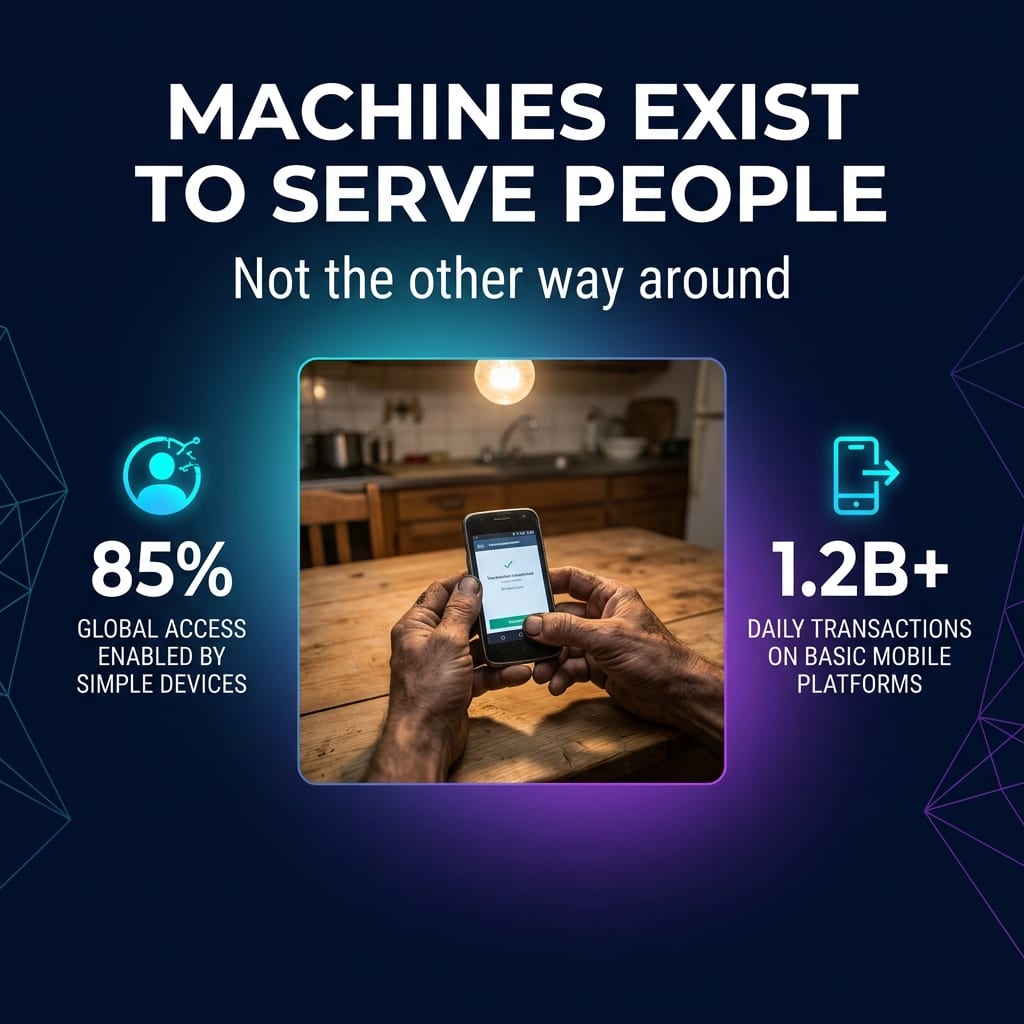
That's the belief that runs under everything I build. Machines exist to serve people, not the other way around.
Here's what I've learned watching "brilliant" systems fail:
A protocol nobody trusts is a museum piece.
A wallet a farmer can't use is a demo, not a product.
An AI model that can't explain itself is a liability wearing a lab coat.
The part nobody wants to say: most of us fall in love with the machinery and forget who it's for. I've done it. I once optimized a smart contract for gas so aggressively that no normal user could read what they were signing. Clever. Useless.
So now I run one test on every project. Would it still matter if nobody marketed it? Would a real person be better off using it?
If the answer is no, the algorithm can be perfect and it still doesn't ship.
Bonding between machines and humans is the whole point. Not a tagline. The actual job.
What's the "clever but useless" thing you shipped and quietly killed?
The biggest lie in tech? That all AI is beneficial by default. Without verifiable data and transparent models, it's just a powerful black box. We need to demand more from our intelligent systems.